Hut Safety Series: “What Makes Winter Hut Trips So Challenging?”
10th Mountain Huts
February 14, 2026
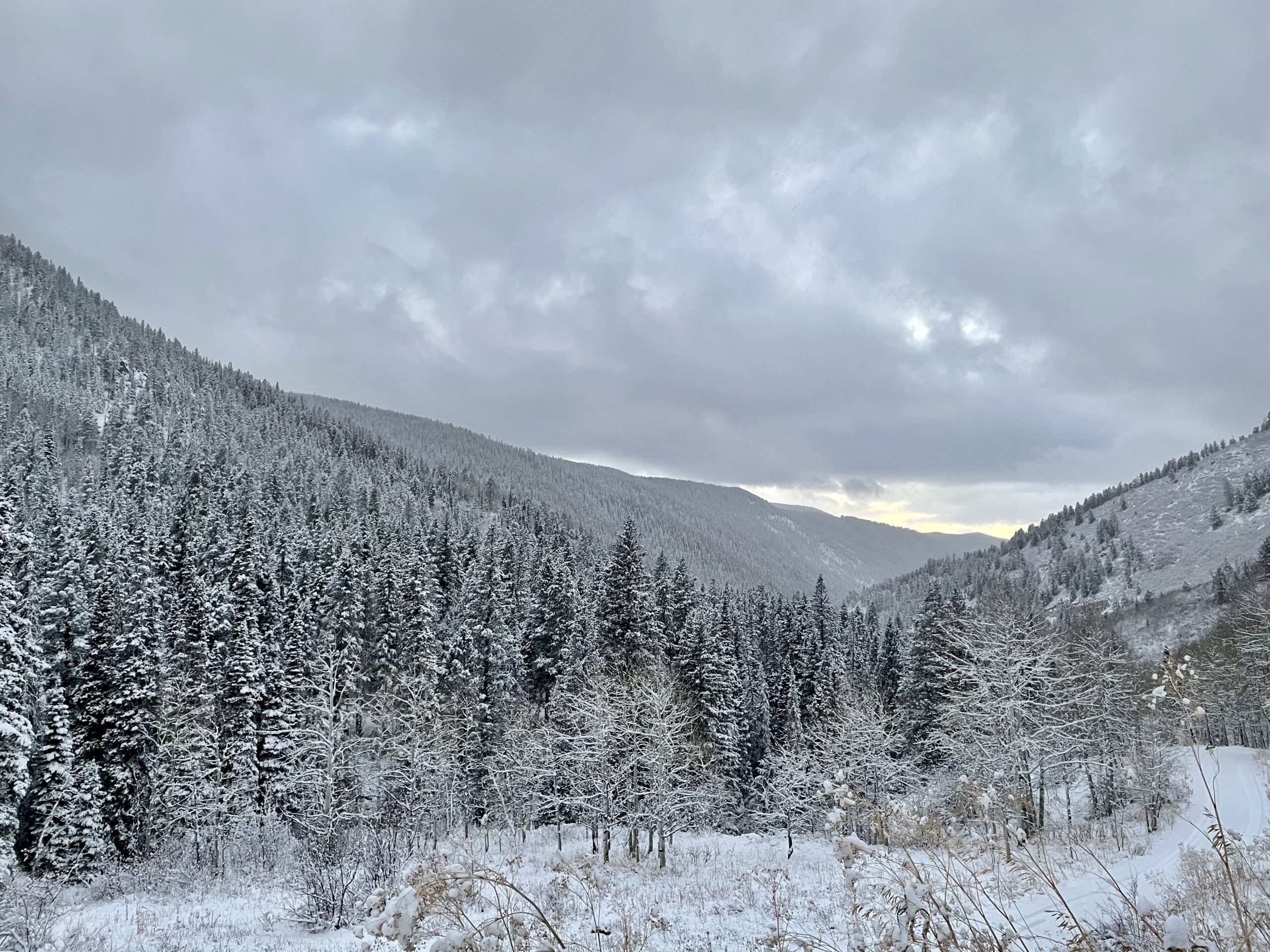
This current winter season may be different from those we’re used to here in the Rockies, but the unique challenges and risks of winter hut travel are still very much the same – and must remain top-of-mind when planning and taking a hut trip this year.
Continuing with our Hut Safety Series, we take a closer look here at some of the factors that make winter hut travel especially demanding, and why it’s so important to be aware of these particular challenges and prepare from them specifically.
The Distinct Challenges of Winter Hut Travel
While travel to and from each hut in the 10th Mountain system is different, winter hut trips are always a serious endeavor, and should never be taken lightly. There are a number of reasons why hut travel is exponentially more challenging – and exponentially more risky – in winter. Some of these include:
- Weather and visibility concerns: Even if it’s warm and sunny when you start, there’s always potential for sudden shifts in conditions, and these become more extreme in winter. Cold temperatures, especially with wind chill, can quickly become dangerous, and poor visibility can become a major hazard when traveling in the backcountry.
- Each respective hut page on the 10th Mountain Huts website shows a hut-specific weather report at the bottom, and hut visitors should be checking forecasts closely in the days leading up to their trip. That said, no matter how good the forecast, hutgoers must always be prepared for inclement weather, including extreme conditions.
- Avalanche hazards: The Colorado backcountry is known for widespread and long-lasting snowpack instabilities, and a number of the suggested routes to 10th Mountain Division Huts pass through or are next to terrain that may be prone to avalanches. Avalanche hazard is a serious concern for all winter travelers, and this winter is no exception. In fact, the Colorado Avalanche Information Center (CAIC) recorded 830 avalanches during the month of January alone.
-
- Hut visitors should pick the suggested route that most suits their group’s abilities, carry appropriate equipment, and always exercise prudent backcountry travel techniques. We strongly suggest that someone in every group be well experienced in evaluating avalanche and snow stability hazards, reading terrain, continuously evaluating risks, and practicing judicious backcountry travel techniques. For up-to-date avalanche information for all of Colorado, visit the CAIC website. We recommend that groups start checking this site regularly in the days leading up to a trip to see how conditions are evolving.
- Increased travel times: Hut travel can take significantly longer in winter than other seasons. Winter travel is more physically demanding, and there are many more factors that can impact travel times and level of difficulty, from variable snow and weather conditions to hidden obstacles that may increase injury risk, and more. The potential for longer travel times also increases exponentially when hut users are breaking trail, which is common when headed into a hut.
-
- Hut users should choose their route carefully, ensuring it’s appropriate for their group. Research expected travel times, and then allow for extra time when planning your hut travel timeline – getting an early start is crucial! All hut visitors should be prepared to break trail, and be fully prepared to be out in the backcountry into the night or even overnight, in case of an emergency.
- Navigation challenges: Navigating to the huts is a serious task all year, and even more so in winter. Suggested routes are only intermittently marked with blue diamonds, except in National Forest Wilderness areas, where only tree blazes are allowed. Hut users cannot expect to find broken trail, and from one trail marker the next one is usually not visible. Even shorter trips, with minimal elevation gains, can become very challenging in whiteout conditions, or if a group has to break trail in deep snow. Route finding may be the most important skill you need for a successful winter hut trip!
- In addition to leadership, avalanche awareness and first aid skills, someone in each hut group must have excellent route finding skills. A detailed topographic map, a compass, and the ability to use them are absolutely essential for any winter hut trip. We also highly recommend downloading the .GPX files for your respective route [found on each hut page, under “Trailheads/Routes”], and using it with a compatible GPS device or navigation app – in addition to bringing a traditional map and compass, and knowing how to use them. Practice your navigation skills before your trip!
- Greater skills requirements: While most of our ‘standard’ winter hut routes generally require the use of intermediate backcountry skiing skills, some trail sections and routes are more difficult, and may require more advanced skiing skills. Specific conditions can also increase trail difficulty, consequently requiring more advanced skills on a given day.
- Skiers must be strong and stable on their skis, and have proper equipment. If snowshoeing, hutgoers must be familiar with traveling on snowshoes, and comfortable covering substantial distances in snowy conditions.
The bottom line: Winter hut travel is especially challenging, and comes with serious risks.
ALL hut users – regardless of experience – should read (and/or re-read) our various preparation and safety materials linked here, in the “Must Read” section before embarking on any hut trip. Hutgoers must always be prepared for an emergency.
If you would like to improve your skills, 10th Mountain, Summit Huts, Grand Huts, and many other organizations sponsor backcountry skills and avalanche awareness workshops each winter, to help prospective hutgoers become more knowledgeable and prepared for backcountry travel. Please see the Courses section of this site for more information on upcoming classes.